Embedding Intervention - A Team Approach
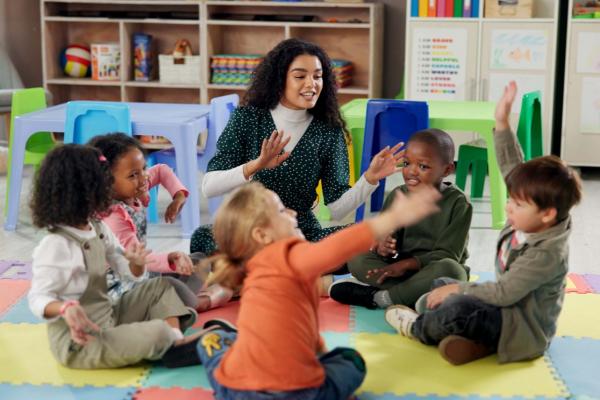
The daily routines and activities of the early childhood environment provide the most appropriate opportunities for children to learn and develop. Traditional models of service delivery have focused much attention on the pull-out model of addressing individualized education plan (IEP) goals. However, research suggests that goals which are embedded into regular classroom routines and activities produce more positive child outcomes and improve communication between the classroom staff and itinerant/related service providers. When IEP goals are developed around the natural routines and activities of the classroom and home, goals may be implemented more frequently and by all professionals who serve the child.
This one-day course focuses on practical strategies to embed intervention and integrate therapy for young children with disabilities (ages 3-5) in early childhood programs. The content of the session will reflect evidence based research that addresses the individual needs of children with disabilities within the daily routines and activities of the early childhood setting.
Sessions At a Glance
| Location | Training Date(s) | Follow-Up Date(s) | Application | Registration Deadline |
|---|---|---|---|---|
| Williamston |
|
Download Application Form (PDF) | November 18, 2009 | |
| Asheville |
|
Download Application Form (PDF) | December 29, 2009 |
To Apply
There is no application fee for this training. To apply for one of these training sessions, please complete and return the application form. Space is limited to 50 participants.
Note: If you return your application form by fax, please call Dave Sanel at 919.966.1593 to verify that your fax was received.
Participant Objectives
The participants will:
- Review models of service delivery
- Learn the what and why of embedding intervention and integrating therapy
- Link IEP goals to the routines of the classroom and home
- Understand different methods and strategies of related service delivery that embed goals in classroom routines
- Examine different methods for documenting progress toward IEP goals that are embedded in the classroom routines
- Review strategies to promote collaboration through teamwork and consultation
Target Audience
Target audience will include specialized therapists, itinerant teachers, administrators, teachers, and teacher assistants serving preschool children. Applicants are encouraged to apply as a team and will be accepted based on relevance of training to current job duties. Email notifications will be sent to all accepted applicants two weeks prior to the training with details regarding that session.
Questions
Contact Dave Sanel at 919.966.1593 or email him at sanel@mail.fpg.unc.edu.
Faculty
Vivian James, Exceptional Children's Coordinator, Office of School Readiness
Sandy Steele, Inclusion Specialist, Partnerships for Inclusion
Lauren Holahan, Consultant in Occupational Therapy, UNC-CH
Laurie Ray, Consultant in Physical Therapy, UNC-CH
Perry Flynn, Consultant in Speech-Language Pathology, UNC-G