A partnership among families, schools, the community, the FPG Child Development Institute, and The University of North Carolina at Chapel Hill

Vision

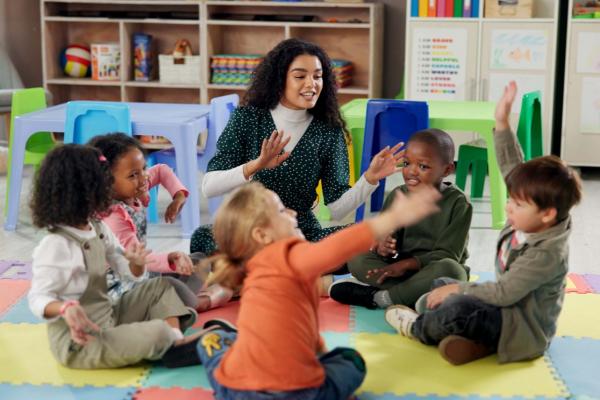
FirstSchool is a learning community in which development and education of 3-to-8-year-old children is at the heart of everything we do. Every child has a right to a successful, enjoyable, high quality FirstSchool experience that fosters intellectual, physical, emotional, and social well-being, and optimizes learning and development. In partnership with families and communities, FirstSchool accepts responsibility for preparing each child for a lifetime of learning—in school and beyond.

Why is a new vision needed?

  • Children's experiences during the early years provide the foundation for later school success. Parents are children's first teachers. Many children also spend large amounts of time in early care and education settings outside their home. Whatever their setting, children who have high quality experiences before they enter kindergarten are more successful in school. Yet many children do not receive the quality early experiences they need.
  • America is becoming more diverse. About 45% of children under 5 are ethnically or linguistically diverse, according to the 2004 U.S. Census. This percentage is expected to grow over the next decade. Public schools must adapt to meet the needs of this increasingly diverse population of children.
  • Public school involvement with young children is increasing. More than a million children—almost one-fourth of all 4-year-olds—are in a public school program today. Some public schools serve 3-year-olds as well. Very likely in the next 10 to 20 years, public schools will become a prevalent choice for families in educating and caring for young children.
  • A smooth, coordinated learning experience from ages 3 to 8 is important to children and families. Many children in this age range are served by multiple programs, which make it difficult to provide a continuum of learning. Even when children are served within a single setting such as a public school, continuity from grade to grade may be lacking.
  • A variety of federal, state, and local agencies are responsible for the education and care of 3- and 4-year-olds. We need a more coordinated, systematic approach to serving young children and their families. The experiences of children and families often vary dramatically depending on the particular program they use. These agencies often have no formal mechanisms for communicating about the care and educational needs of individual children or the community as a whole.


Collectively, these facts call for action. It is time to work toward a new vision for the education and care of young children ages 3 to 8. We believe we can best develop and implement a new model of early schooling only through strong collaborative relationships with all those involved in the education and care of children—families, the early childhood community, public schools, and a wide range of individuals and agencies who are invested in positive outcomes for children.